

By Abdulaziz Mohammed Malah
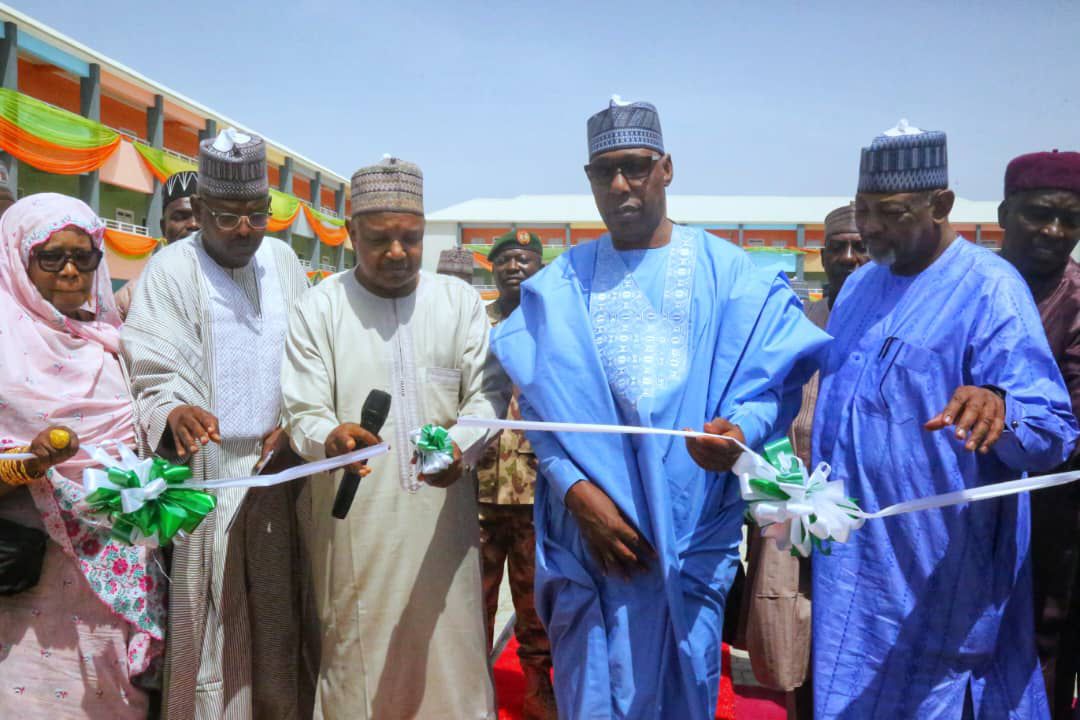
Babagana Umara Zulum, Governor of Borno State, has, distributed farm tools to farmers and commissioned a newly constructed Higher Islamic College in Damasak, headquarters of Mobbar Local Government Area.
The governor was accompanied by the Minister of Budget and Economic Planning, Abubakar Atiku Bagudu, and the Minister of Agriculture and Food Security, Abubakar Kyari, alongside other top government officials.
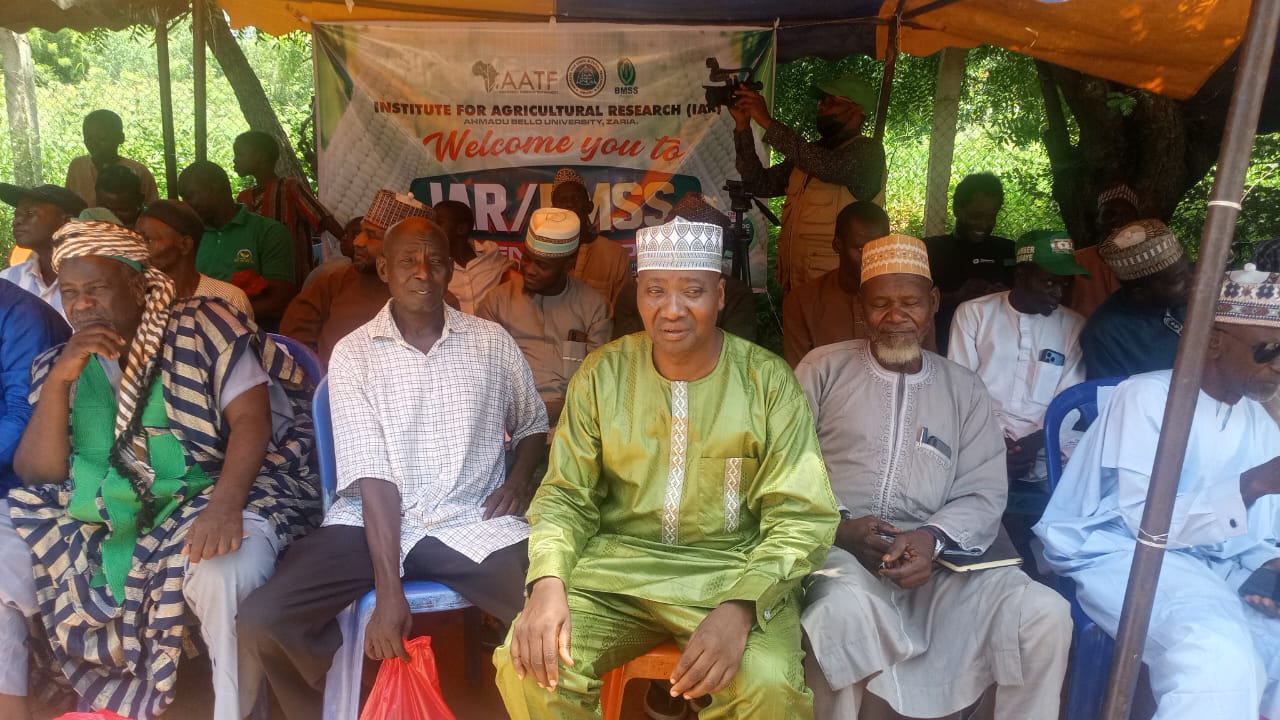
Zulum’s agricultural intervention is aimed at boosting dry-season farming and improving the livelihoods of returnees who are gradually resettling in Damasak and surrounding communities.
Speaking during the distribution, the governor said, “From the beginning of this administration, dry season irrigation farming was adopted as a strategic component of the state’s food security framework. Recognising the limitations of rain-fed agriculture in the context of climate variability, insecurity, and population growth, the government implemented a dual-season production strategy to ensure year-round farming.”
He added, that the distribution of 1,000 solar-powered water pumps and 200 complete tubewell drilling kits builds upon earlier targeted interventions in Damasak and neighbouring communities, including irrigation infrastructure development, mechanisation services, farmer training, cooperative support, and security stabilisation measures.”
Zulum further stated that the state remains aligned with the Presidential Food Systems Coordinating Unit and continues collaboration with relevant federal ministries and development partners to strengthen agricultural productivity, processing, and market integration.
At the commissioning of the Higher Islamic College, Damasak, the governor described the project as a major milestone in the state’s efforts to expand and modernise sangaya education across Borno.
“The commissioning of the Higher Islamic College, Damasak, represents a significant step in our policy to build an inclusive education system that integrates spiritual development with academic and vocational advancement,” he said.
He explained that all Higher Islamic Colleges in the state operate under the approved curriculum of the National Board for Arabic and Islamic Studies, enabling students to obtain O-Level equivalent certification and pursue further education if they so desire.
In his remarks, the Commissioner for Education, Engr. Lawan Abba Wakilbe, highlighted the administration’s achievements in the education sector., noting that the institution forms part of a broader education recovery and expansion programme across the state.
According to him, the government has constructed 104 mega schools, rehabilitated and remodelled 1,087 classrooms, carried out major works in 40 additional schools, restored 30 flood-affected schools, and delivered numerous classroom projects through the State Universal Basic Education Board.
Other members of the governor’s entourage included the Secretary to the State Government, Bukar Tijani; the Commissioner for Agriculture, Engr. Bawu Musami; and the APC Women Leader, Hajiya Fati Alkali Kakenna.


Leave a Reply