

By Aisha Mohammed
Heavy bleeding, prolonged periods and lack of WASH facilities have long affected school attendance and performance among young girls in rural communities.
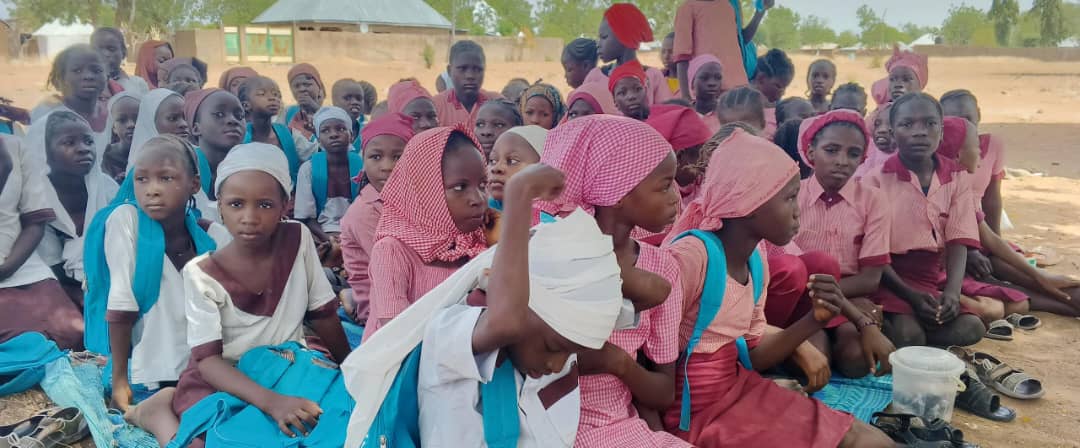
A trip, to Guyuk Local Government Area of Adamawa State revealed that increased sensitization on menstrual hygiene management is helping reduce absenteeism among schoolgirls during their periods.
At Guyuk 2 Primary School, a teacher, Rose Russia, said many girls miss classes due to poor awareness and the absence of proper WASH facilities.
She also pointed to the high cost of sanitary pads as a barrier affecting attendance and performance.
Russia noted that interventions by the United Nations Children’s Fund UNICEF, the Adamawa State Government and the Rural Water Supply and Sanitation Agency, RUWASSA, to include the provision of WASH facilities and training on production of reusable sanitary pads have significantly improved the situation.
Hygiene Officer with RUWASSA, who facilitated an awareness session to mark the 2025 World Menstrual Hygiene Day, Jummai Destiny, said cultural beliefs in Guyuk have also contributed to poor menstrual hygiene management.
Destiny encouraged girls not to feel ashamed and to adopt reusable sanitary pads for better hygiene.
RUWASSA WASH Coordinator in Guyuk, Dawasimni Haskainu, explained that UNICEF’s intervention has reached 11 primary schools in Guyuk and expanded to 90 schools across the area.
He said local seamstresses were trained to produce reusable pads and teach girls how to make them.
Haskainu also urged men to support menstrual hygiene campaigns.
A pupil, Rabi Haruna, demonstrated how to use the reusable pads and listed items included in the UNICEF sanitary kit.
The 2025 World Menstrual Hygiene Day, themed Together for a Period-Friendly World, was echoed by pupils during the awareness session.
The day, marked every May 28, aims to break taboos, raise awareness, and promote girls’ health and education through better menstrual hygiene practices.







Leave a Reply