

By Abubakar Hardawa
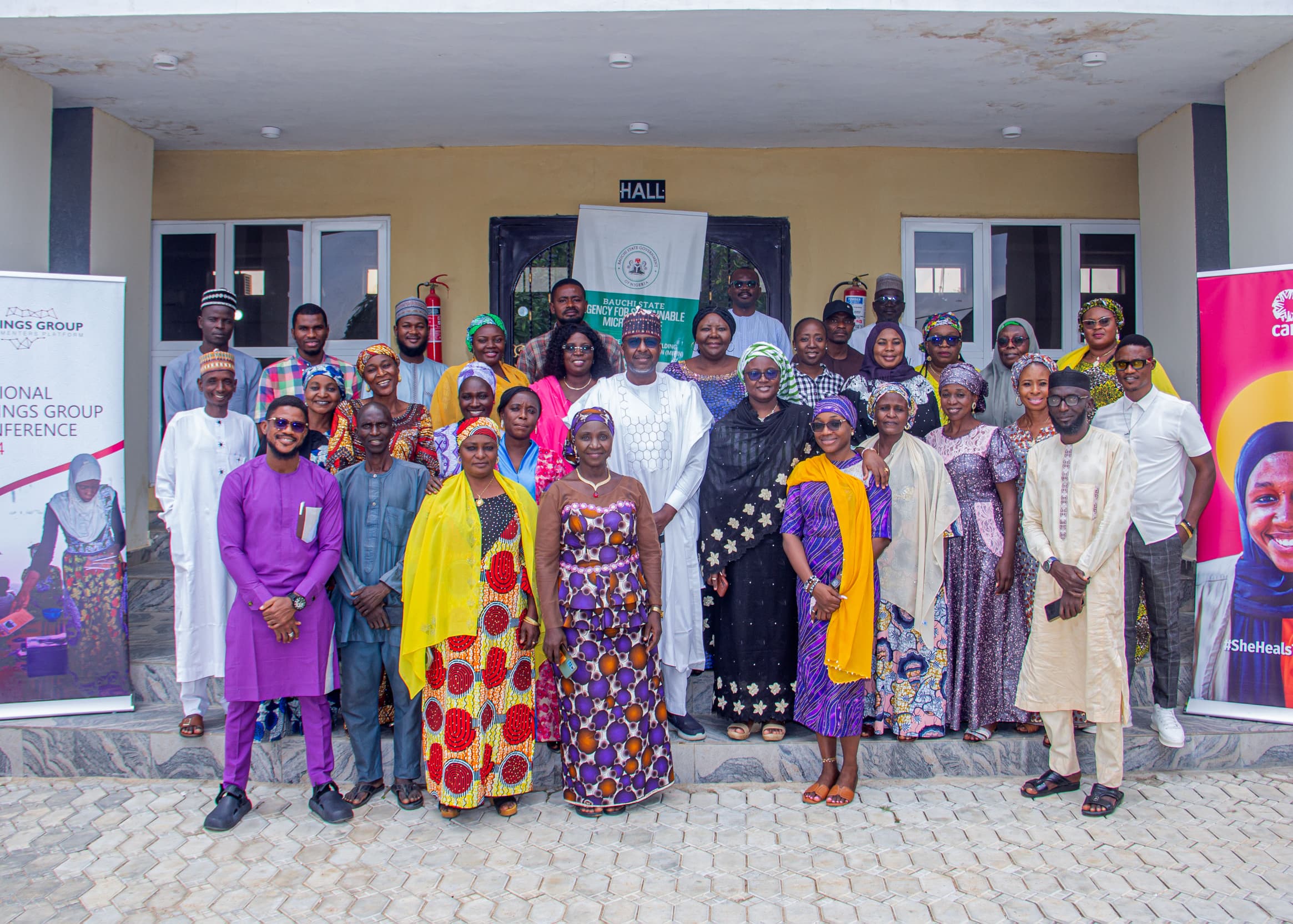
The Bauchi State Agency for Sustainable Microfinance has officially adopted the Savings Groups Implementers Platform (SGIP) as the primary implementation framework for its non-interest microcredit initiative—a significant step toward enhancing financial inclusion in rural communities.
The announcement was made during a five-day stakeholder workshop in Bauchi, organized in partnership with CARE Nigeria, to review and finalize SGIP’s operational guidelines.
SGIP, established by CARE, serves as a unified platform that integrates
Microfinance Institutions (MFIs), Civil Society Organizations (CSOs), and savings group networks. under a single structure.
Its objective is to expand financial access through a structured, data-driven, and community-centered approach.
Previously, the Agency distributed loans indirectly through MFIs to Village Savings and Loans Associations (VSLAs).
While effective, this method faced challenges in scalability and coordination.
The SGIP model now introduces a centralized system, enabling partner organizations to collaboratively manage loan disbursement, monitor progress, and track outcomes.
Alhaji Nura Muhammad Danmadami, Director General of the Agency, described the move as a “turning point” for the state’s microfinance strategy. “SGIP now serves as the backbone of our non-interest microcredit scheme, bringing together key players—MFIs, CSOs, and savings groups—into a cohesive, accountable structure with a shared vision,” he stated.
Danmadami emphasized SGIP’s adoption of the SAVIX Management Information System (MIS) for real-time data reporting and decision-making. He noted that SGIP partners are already engaged in communities—training VSLAs, mobilizing savings, and ensuring grassroots oversight.
The DG urged stakeholders to contribute to refining SGIP’s operational framework to ensure its long-term success in Bauchi.
CARE Nigeria’s Program Coordinator, Faiza Muntaka applauded the Agency’s decision, calling SGIP a “model for locally led innovation.”She highlighted its alignment with CARE’s focus on financial inclusion, gender equity, and community empowerment.
Muntaka also cited key milestones, including:
- Training government and CSO representatives on the SAVIX platform
- Launching a Monitoring, Evaluation, Accountability, and Learning (MEAL) system
- Positioning Bauchi’s SGIP as a replicable model for other states
“SGIP is more than a program—it’s a blueprint for sustainable, scalable, and accountable development,” she remarked.
As the workshop progresses, stakeholders are working to finalize policies and coordination mechanisms that will drive SGIP’s expansion and maximize its impact across Bauchi State.









Leave a Reply