

By Abdullahi Jalalludeen
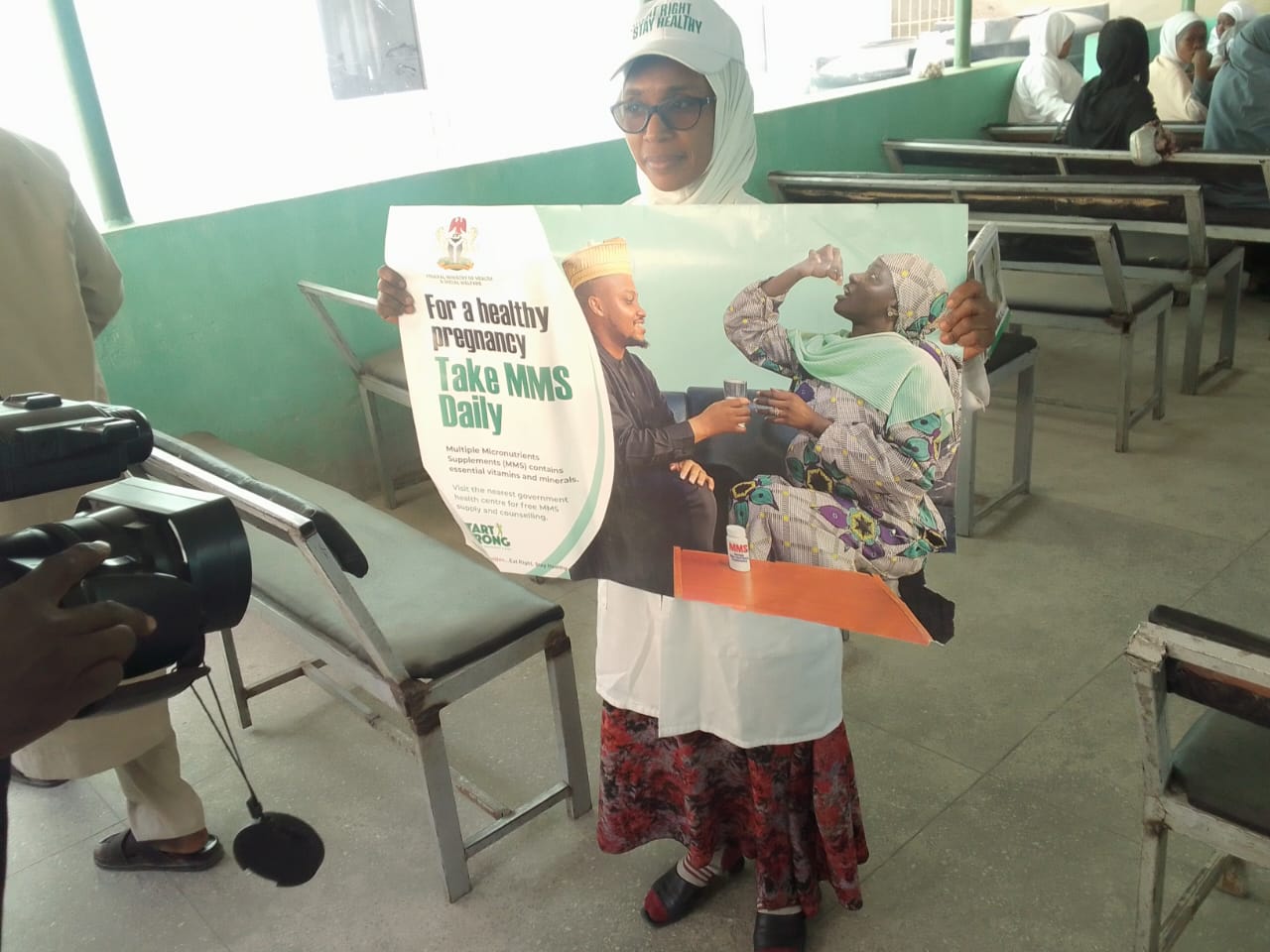
Pregnant women attend an antenatal session at a primary health centre in Kano, where free anaemia drugs are distributed to boost maternal and child health.
In the bustling Gwagwarwa area of Kano, the antenatal clinic at the local health facility fills up early. Women in colourful hijabs sit patiently, listening as health workers speak about nutrition, safe delivery and the importance of preventing anaemia during pregnancy.
For many of them, these sessions are more than routine check-ups — they are lifelines.
“My name is Zainab Salisu Aliyu from Gama quarters,” she begins with a shy smile. “I have been coming to this health facility whenever I am pregnant. During our antenatal lectures, we are enlightened on the importance of anaemia drugs, and they are given to us free of charge.”
Zainab says she never misses her doses.
“I actually feel better when taking them. It helps me a lot. I feel stronger, and I know it is good for my baby.”
Anaemia — a condition marked by low levels of healthy red blood cells — is a common challenge during pregnancy, particularly in low-resource settings. Iron and folic acid supplements, often referred to locally as “anaemia drugs,” are routinely prescribed to prevent complications such as fatigue, premature birth, and low birth weight.
For Hauwa Idris from Tudun Wada, the difference is clear.
“This is the facility I usually attend for my antenatal,” she says. “We were told that taking the anaemia drugs helps to boost our blood and helps the baby we are carrying. It helps us deliver healthy babies.”
She believes there is a noticeable contrast between women who attend antenatal clinics and those who do not.
“There is a lot of difference between those of us who take the anaemia drugs and those out there who don’t attend antenatal and do not take these drugs,” Hauwa explains.
“We commend the government for providing these drugs, but we urge them to do more so that it will go round for all pregnant women.”
At the facility, Zulaihat Idris, the Nutrition Officer in charge at Gwagwarwa Health Facility in Kano, says education remains a key part of their work.
“We always enlighten pregnant women when they come for antenatal about the importance of using anaemia drugs,” she explains. “They contain nutrients and vitamins that pregnant women need to boost their health and that of their babies.”
According to her, adherence is critical.
“We always encourage them to strictly take the drugs as prescribed. Lack of taking anaemia drugs during pregnancy can create a lot of health challenges for the child after birth. That is why it is very important for pregnant women to take them.”
However, she admits that supply remains a challenge.”The anaemia drugs are not always available in quantities that will reach all pregnant women attending antenatal here. We explain to them and ask them to exercise patience.”
She noted that supplies are often more stable during Maternal and Child Health Week campaigns, when additional support is provided and more women are reached.
Beyond government efforts, non-governmental organisations are also stepping in. NGOs such as CS-SUNN have been advocating for increased awareness and consistent supply of anaemia drugs, stressing that proper enlightenment can significantly improve maternal and child health outcomes.
Their campaigns focus not only on distribution but also on education — ensuring women understand why the supplements matter and why skipping doses can be dangerous.
Back at the clinic, as the session ends, women line up to collect their supplements. For them, the small tablets represent protection — against weakness, against complications, against preventable loss.
Zainab clutches her antenatal card and smiles.”When we take these drugs, we feel the difference,” she says softly. “We just want every pregnant woman to have the same opportunity.”
For the mothers of Gwagwarwa and Tudun Wada, the message is simple: access to anaemia drugs is not just about medicine — it is about giving every child a healthier start in life.






Leave a Reply